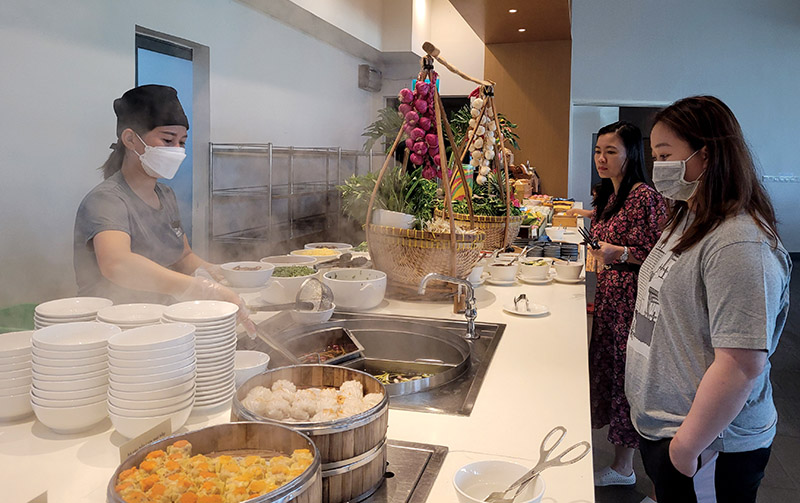
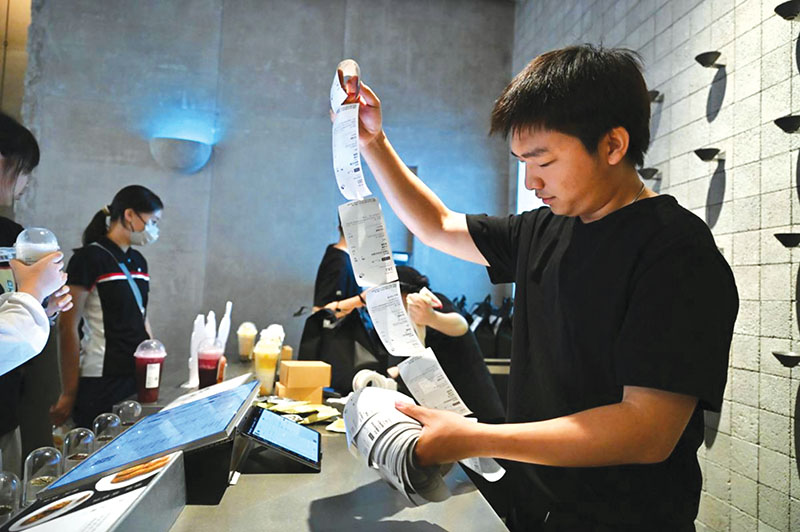
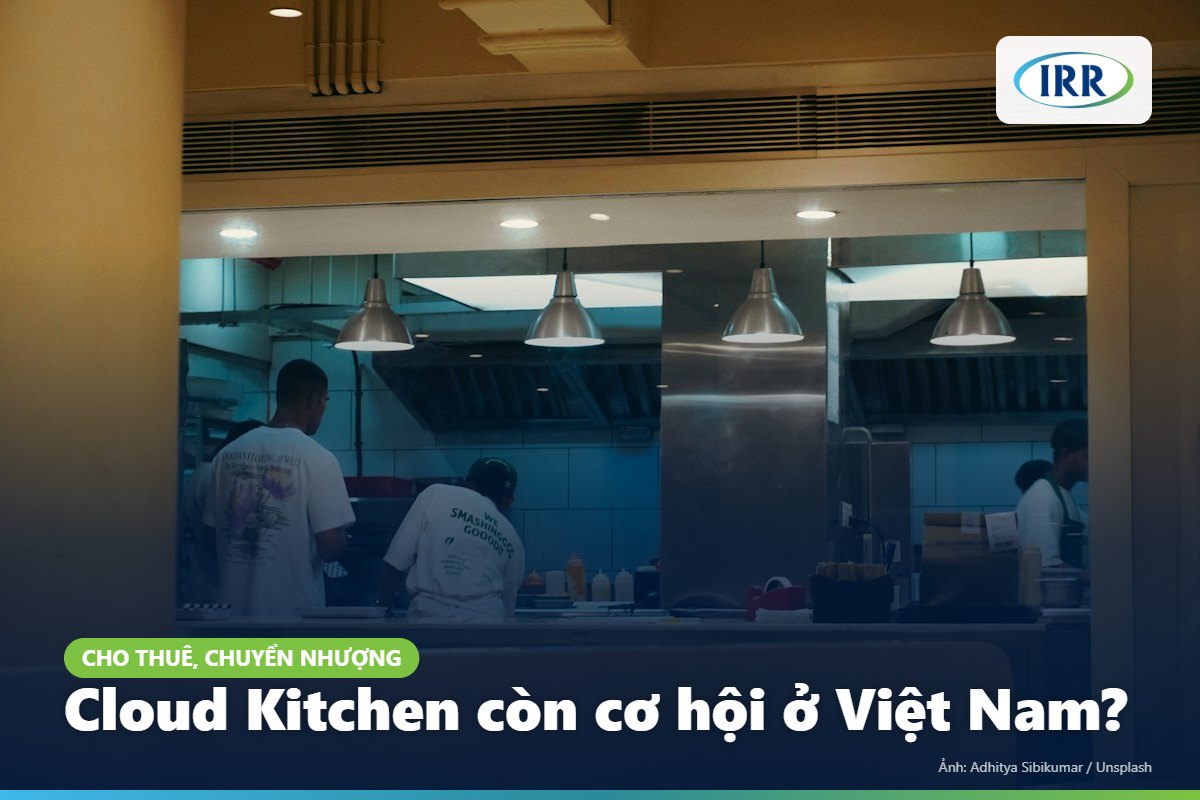
A smooth shift is not necessarily a good business day. A restaurant can be fully booked from 6 pm to 9 pm and still lose money at the end of the month. The difference between a Restaurant Manager who "runs shifts" and one who "runs a business" is simple: the second one reads the numbers behind the shift, and reads them every day rather than waiting for the month-end report.
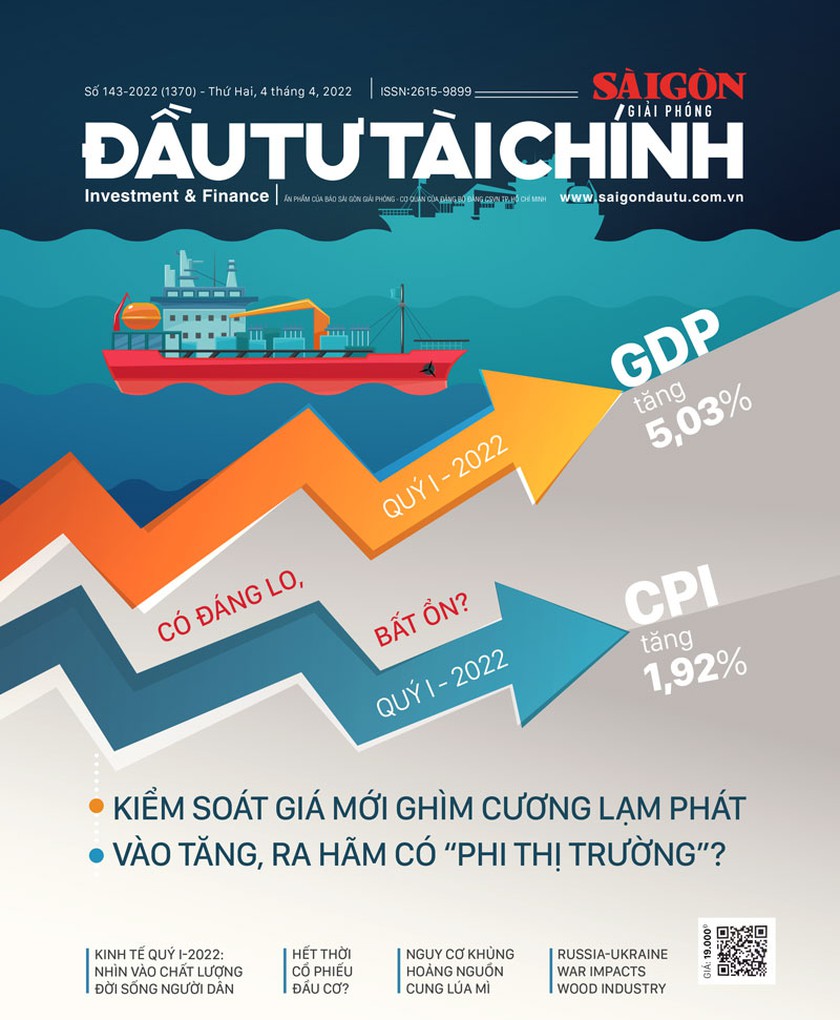
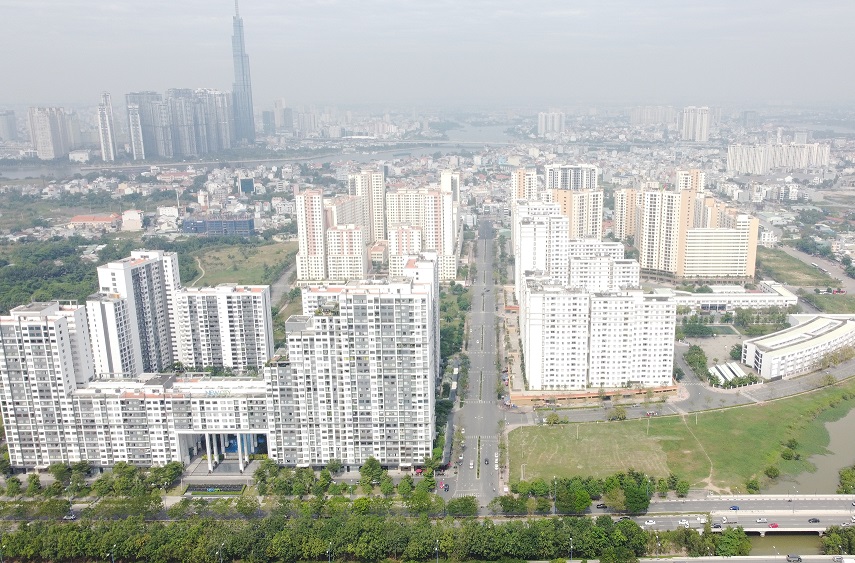
According to the Vietnam F&B Market Report 2025–2026 released on 8 April 2026 by iPOS.vn and Nestlé Vietnam (data advised and verified by VIRAC), the market is forecast to reach about 333,600 outlets and around VND 760 trillion in revenue in 2026, up roughly 4.6%. These are forecasts, not full-year actuals. The same survey found that 69.38% of businesses were affected by sharp increases in ingredient prices.
Put together, the picture is familiar: the market is still growing, but slowly, while input costs rise faster. Margins are squeezed from both sides. In that environment, a small deviation in labour cost or ingredient waste, left unnoticed for 30 days, can wipe out a month's profit.
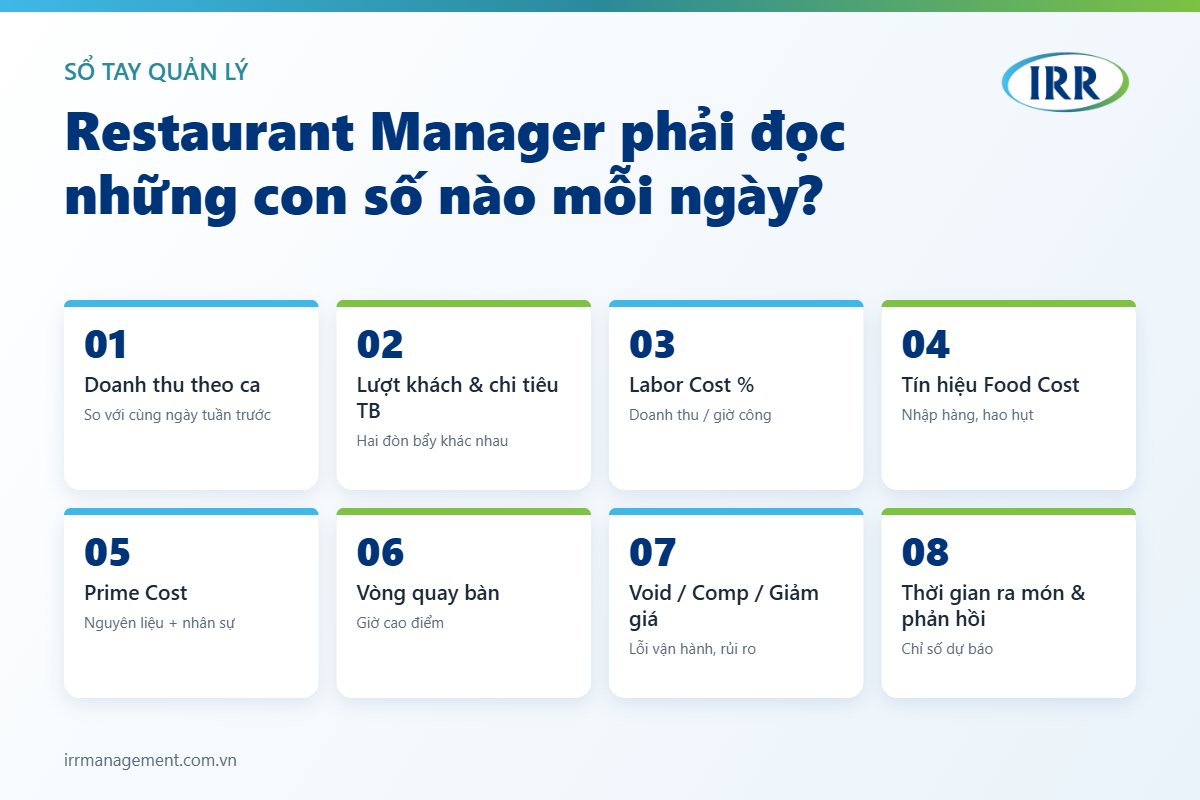
So the real question is not "Does a manager need to read numbers?" but "Which numbers, every day, and in how many minutes?"
The daily total tells you the result, not the cause. Broken down by shift and hour, it shows which hours carry the business and when staff are standing idle. Always compare with the same day last week and with budget, rather than with yesterday.
Revenue = covers × average spend per guest. These are two very different levers:
This is the major cost a manager can adjust fastest, through tomorrow's roster. Divide the day's labour cost by the day's revenue. A useful companion metric is sales per labour hour, which shows precisely which shifts are over- or under-staffed.
Accurate food cost requires a stock count, usually weekly or fortnightly. But daily early signals are available:
Prime cost is food cost plus labour cost as a share of revenue. A commonly cited international benchmark is prime cost not exceeding about 60% of sales, typically around 30% food and 30% labour (White Hutchinson Leisure & Learning Group).
Note: this is an international reference point. Each format in Vietnam has its own cost structure. What matters is that your restaurant has its own benchmark and tracks how far it deviates every day.
At peak time, seats are the scarcest resource. Low turnover while guests are still waiting usually signals a bottleneck in the kitchen, table clearing or payment, not a lack of demand.
An unusual rise can indicate operational errors, training gaps or fraud risk. Review the list daily, with the staff name and reason.
Not every number is financial. Order-to-table time, complaints per shift and online ratings are leading indicators: today's revenue reflects last week's experience, and today's experience shapes next week's revenue.
Above all, share the numbers with the team, so they become a common language rather than the manager's private concern.
A manager who cannot read numbers always manages after the fact. When reading numbers becomes a daily habit, the manager starts to manage ahead, spotting problems while they are still small signals. This skill can be developed through guided practice and structured hospitality management training, the kind of development IRR has supported for businesses and learners for many years.
Sources:
IRR Group – International Recreation & Resort Management

Telephone: 0909.140.866
Email: info@irrmanagement.com.vn